


What Do the Marks Inside Your Ring Mean?

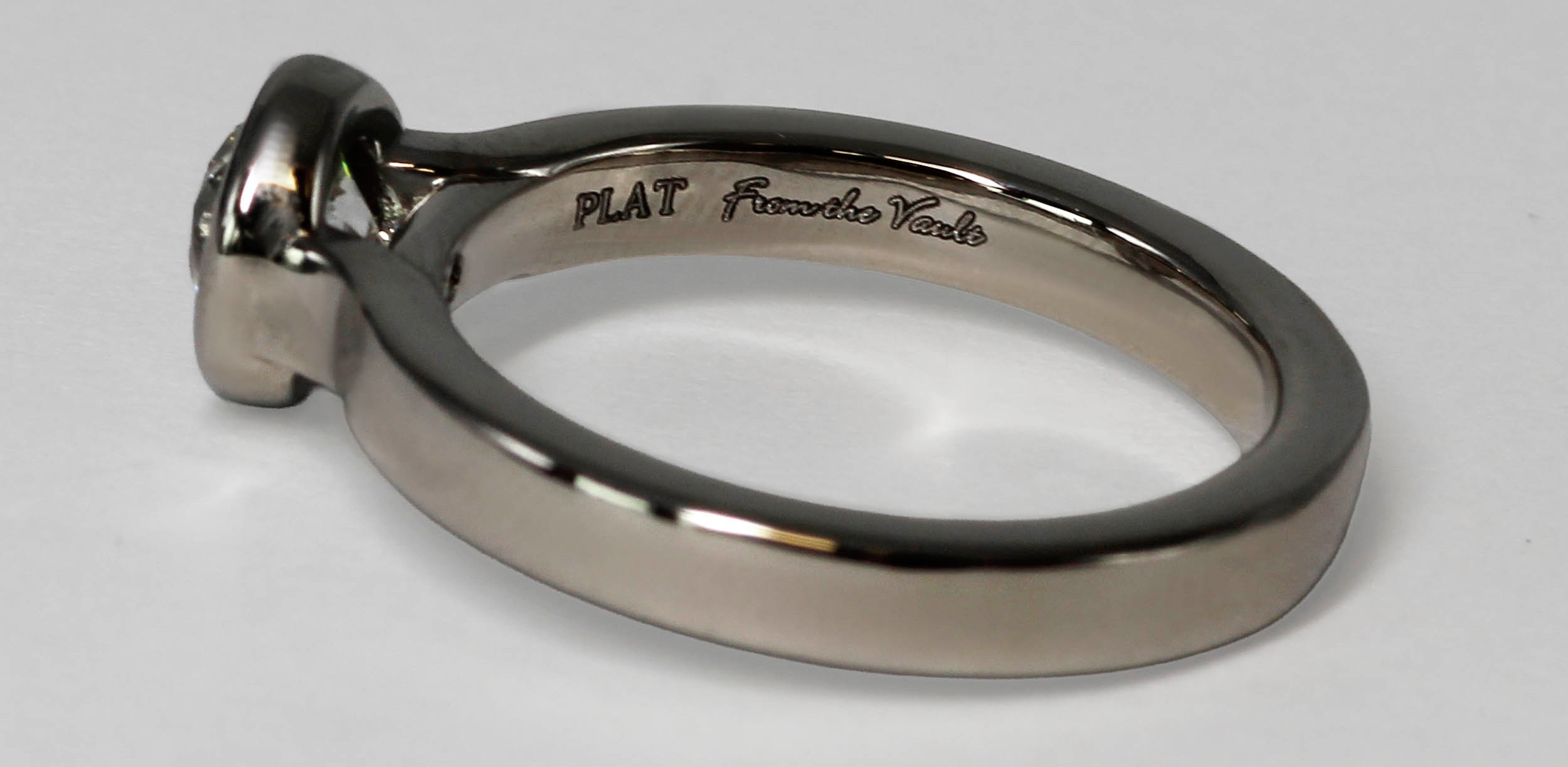
Have you ever looked inside a ring and noticed a series of tiny numbers, letters, or symbols? These small markings can reveal important details about a piece of jewelry, including its gold content, the type of metal used, and sometimes the maker or country associated with its production.
Whether you are examining a new engagement ring, an inherited family heirloom, or a piece of jewelry you have worn for years, understanding these marks can help you learn more about what you own. At From the Vault Jewelers, we believe that understanding the craftsmanship and history behind jewelry makes each piece more meaningful. Here is a guide to some of the most common markings you may find inside a ring.
What Are Jewelry Hallmarks?
Jewelry markings are small stamps or inscriptions placed on a piece during manufacturing or marking. They can communicate information about the metal's purity, identify a maker or responsible company, or provide clues about a piece's origin.
Two terms you may encounter are quality marks and maker's marks.
A quality mark indicates the fineness of the precious metal. A maker's mark identifies a manufacturer, sponsor, or other party associated with the piece. In countries with formal hallmarking systems, additional marks may identify an assay office or indicate that the metal has been independently tested.
GIA explains that these marks can be valuable clues when examining jewelry, particularly older pieces. However, marking systems vary between countries, and not every ring will contain every type of mark.
What Do Gold Markings Like 10K, 14K, and 18K Mean?
One of the most common markings inside a gold ring is its karat designation. This tells you the proportion of pure gold in the metal alloy.
Pure gold is 24 karats, but it is relatively soft for many jewelry applications. Gold is therefore commonly mixed with other metals to improve its strength and influence its color.
Here is what the most familiar gold markings mean:
10K: 10 parts gold out of 24, or approximately 41.7% gold.
14K: 14 parts gold out of 24, or approximately 58.3% gold.
18K: 18 parts gold out of 24, or 75% gold.
24K: Pure gold, or approximately 99.9% gold when referring to commercially refined fine gold.
The remaining metal consists of other metals used in the alloy. Their composition can influence whether the gold appears yellow, white, or rose-colored.
Why Do Some Rings Say 585 or 750 Instead?
Instead of using karats, jewelry may be marked with a number representing the metal's fineness in parts per thousand.
For example:
417: Approximately 41.7% gold, corresponding to 10K.
585: 58.5% gold, commonly associated with 14K gold.
750: 75% gold, corresponding to 18K gold.
999: 99.9% precious metal, often used for fine gold or fine silver depending on the metal being identified.
These numerical markings are common in international jewelry. You might find them on a ring made overseas or on an older piece with a history outside the United States.
What Does 925 Mean on a Ring?
If you find the number 925 stamped inside a ring, it generally indicates sterling silver.
Sterling silver contains 92.5% silver, with the remaining 7.5% usually consisting of other metals that help make the material more suitable for everyday use.
You may also see the words STERLING or STER.
Silver can be polished to a bright finish, oxidized to create darker details, or combined with other materials in decorative jewelry. A sterling silver ring may also feature gold plating, so the visible color alone does not always tell you which metal makes up the underlying piece.
What Do PT, PLAT, and 950 Mean?
Rings made from platinum may carry markings such as PT, PLAT, 950, or PT950.
Platinum is a naturally white precious metal valued for its density and use in fine jewelry. Unlike white gold, platinum does not rely on a yellow-gold alloy to create its naturally white appearance.
A mark such as PT950 generally indicates an alloy containing 95% platinum. Other platinum alloys exist, so the precise meaning depends on the complete marking and the applicable standards.
If you are comparing a platinum ring with a white-gold ring, remember that the two metals can look similar but differ in composition, density, care, and repair considerations.
What Does It Mean if a Ring Has No Markings?
Finding no visible stamp does not automatically mean a ring is fake.
Markings can be difficult to see on small or worn pieces. They may also be absent because of the ring's age, origin, manufacturing method, or the way the piece has been repaired or altered. Some rings have very limited space for stamps, and markings may become less legible with wear.
On the other hand (no pun intended), a stamp is not conclusive proof of a metal's composition. A marking can be misleading, incorrectly applied, or associated with a counterfeit piece.
If you are trying to determine whether a ring is genuinely gold, silver, or platinum, a qualified jeweler can examine the piece and recommend appropriate testing. The metal's color and the presence of a stamp should not be treated as definitive proof on their own.
The maker's mark requirement
Under the National Gold and Silver Stamping Act, when a manufacturer or dealer subject to the law applies a gold or silver quality mark—or imports an article bearing one—the article must also bear the applicable person's name or trademark.
For example, if a ring is stamped 14K, the identifying mark may be the company's registered trademark, a symbol, or initials that identify the responsible business. The mark does not necessarily name the individual craftsperson who made the ring.
The important distinction is that this is not a universal requirement for every piece of jewelry to carry a maker's mark. The rule concerns qualifying articles bearing precious-metal quality marks, subject to the law's scope and exceptions.
A quality mark must not misrepresent the precious-metal content of the jewelry. Federal law prohibits certain falsely marked gold and silver goods from entering or moving through interstate commerce, and the FTC Jewelry Guides address misleading descriptions and marks. The exact wording matters, especially for plated and gold-filled pieces. A seller cannot use a marking or description that gives consumers a misleading impression of the item's composition.
Can Jewelry Markings Tell You How Old a Ring Is?
Sometimes, but not by themselves.
Certain international hallmarking systems include date letters or other information that can help establish when a piece was tested. A maker's mark may also connect a ring to a known manufacturer or a particular period of production.
However, many rings do not contain a date. A 14K or 750 stamp identifies a metal standard, not a specific year. To investigate an older ring, a specialist may consider several clues together, including the maker's mark, construction methods, gemstone cuts, setting style, engraving, and any available family history or documentation.
This is one reason antique and inherited jewelry can be so interesting: a tiny stamp may be the beginning of a much larger story.
Do Hallmarks Determine What a Ring Is Worth?
Hallmarks can help establish the type and fineness of a precious metal, which is useful when assessing jewelry. But they do not determine the complete value of a ring.
Other factors include the ring's weight, gemstone quality, craftsmanship, condition, maker, age, rarity, and historical significance.
A well-preserved antique ring from a sought-after designer, for example, may have value beyond its metal content alone. Likewise, a gold stamp does not tell you whether a gemstone is natural, laboratory-grown, treated, or imitation. Those questions require separate evaluation.
If you have inherited a ring or are curious about a piece's value, professional assessment can help you understand its materials and characteristics before deciding whether to repair it, preserve it, or redesign it.
A Small Mark Can Reveal a Bigger Story
The markings inside a ring may be easy to overlook, but they can offer a useful starting point for understanding its materials, maker, and history. From a simple 14K stamp to a series of international hallmarks, each marking provides a clue, though rarely the entire answer.
If you have a ring with unfamiliar markings, an inherited piece you would like to understand, or jewelry you are considering repairing or redesigning, the team at From the Vault Jewelers can help you explore the next steps.
Have a piece of jewelry with markings you cannot identify? Visit From the Vault Jewelers to discuss your piece and learn more about its possibilities.
Gemological Institute of America (GIA), Ten Tips for Buying Jewelry
Gemological Institute of America (GIA), Guide to White, Yellow, and Rose Gold Engagement Rings
Gemological Institute of America (GIA), The Importance of Precious Metal Marks: Past, Present, and Future
Federal Trade Commission (FTC), Buying Platinum, Gold, and Silver Jewelry


Comments